
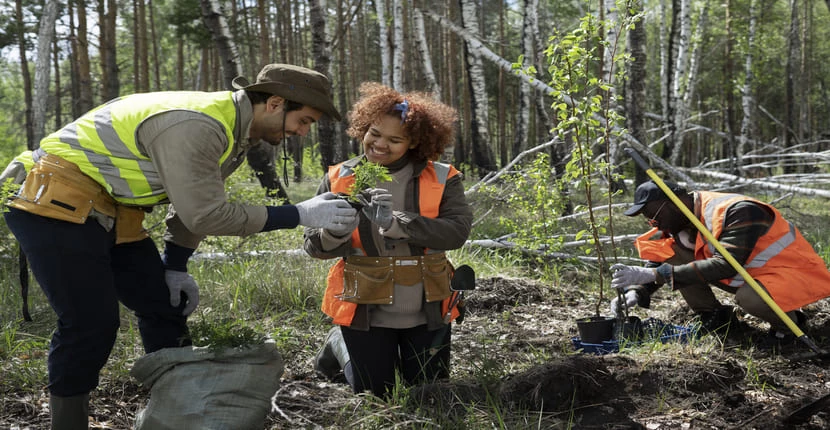
Biodiversity Net Gain Assessment in Alton
Request a free, no-obligation quote for a biodiversity net gain survey todayAt Invasive Weed we specialise in biodiversity net gain (BNG) assessments in Alton to help developers, landowners, and planners comply with the UK Environment Act 2021, which mandates a 10% increase in biodiversity for most developments.
A BNG assessment ensures that construction projects not only preserve but also enhance natural habitats, making them more sustainable.
Many local planning authorities now require a BNG strategy as part of planning applications in Alton, making it an essential component of infrastructure, commercial, and residential developments.
Our licensed expert ecologists do baseline habitat surveys, biodiversity impact calculations, and mitigation and enhancement strategies to help projects meet all regulatory requirements.
For a biodiversity net gain assessment in Alton and across the UK, contact us today for a free consultation.
What Is the Biodiversity Net Gain Assessment Process in Alton?
The biodiversity net gain (BNG) assessment process begins with the initial site survey, where ecologists conduct a habitat assessment to establish baseline ecological conditions. In the next step, the DEFRA 4.0 biodiversity metric tool is used to figure out the existing biodiversity value in Alton and biodiversity unit scores.
This is followed by the impact assessment in Alton, which evaluates how the proposed development will affect biodiversity, identifying areas where habitat loss or degradation may occur.
Based on these results, the BNG strategy development in Alton phase plans ways to improve habitats, fix up damaged areas, or make up for lost biodiversity in order to reach the goal of 10% net biodiversity gain.
Finally, the process concludes with the submission of the BNG report, which includes all required documentation for planning applications and regulatory approval.
What Does a Biodiversity Net Gain Assessment Include in Alton?
A biodiversity net gain assessment in Alton includes habitat evaluation, impact calculation, mitigation planning, and compliance reporting.
Biodiversity net gain surveys in Alton include:
Baseline habitat survey in Alton – Ecologists assess the existing ecological value of the site using the DEFRA biodiversity metric tool.
Habitat classification & mapping in Alton – Categorization of different habitat types and their ecological importance.
Biodiversity impact calculation in Alton – Measurement of potential biodiversity loss due to development and calculation of required biodiversity gain.
Mitigation & enhancement strategies in Alton – Development of habitat creation, restoration, or off-site compensation measures to meet BNG requirements.
BNG report & planning recommendations in Alton – Summary of findings, ensuring project compliance with local planning policies and national biodiversity regulations.
How Much Does a Biodiversity Net Gain Assessment Cost in Alton?
The cost of a biodiversity net gain assessment ranges from £1,500 to £7,500, with additional expenses for habitat offsetting, biodiversity credits, and mitigation plans in Alton.
For small-scale developments, a BNG assessment typically costs between £1,500 and £3,000, while medium- to large-scale projects in Alton may range from £3,500 to £7,500, depending on the level of ecological detail required.
Additional costs may include habitat offsetting in Alton (£5,000–£25,000 per hectare), biodiversity credits (£10,000+ per credit), and mitigation plans (£2,000–£5,000).
Contact Invasive Weed in Alton to get customised pricing for a biodiversity net gain assessment in targeted biodiversity.
Is a Permit Required for a Biodiversity Net Gain Assessment in Alton?
A biodiversity net gain (BNG) assessment in Alton itself does not require a permit, but achieving biodiversity net gain compliance is now a legal requirement for most developments under the UK planning system.
Local authorities require a BNG strategy as part of planning applications, and failure to comply could lead to project delays or rejection. In some cases, if protected species or habitats are identified during the assessment, additional mitigation licenses may be required from Natural England in Alton or relevant regulatory bodies.
Our team in Alton assists in securing permits, navigating planning requirements, and ensuring full BNG compliance.
How Long Does a Biodiversity Net Gain Assessment Take in Alton?
A biodiversity net gain (BNG) assessment takes 2–4 weeks in Alton for small projects and 6–8 weeks for larger or complex sites, depending on survey requirements and seasonality.
A basic BNG assessment in Alton for a small development can typically be completed within two to four weeks, while larger or more complex projects may take six to eight weeks in Alton due to detailed habitat evaluations and mitigation planning.
Seasonality also affects BNG assessments in Alton, as certain habitat surveys must be conducted during specific times of the year.
What Are the Environmental Considerations in a Biodiversity Net Gain Assessment in Alton?
A biodiversity net gain (BNG) assessment of environmental strategies includes habitat creation (wildflower meadows, wetlands, and woodlands), biodiversity corridors, rewilding projects, and off-site biodiversity credits in Alton.
We work with developers to integrate BNG measures in Alton into their projects, ensuring they align with sustainability goals and UK biodiversity laws.
Contact Invasive Weed in Alton to get detailed information on biodiversity net gain assessment in targeted biodiversity.
We cover Alton (Hampshire)